What Is a GLP-1 Medication and How Does It Function?
GLP-1 medications are prescription drugs designed to lower blood sugar and control appetite by mimicking a natural hormone in your body. While social media often promotes fast weight-loss solutions, these medications work by regulating complex metabolic pathways.
A GLP-1 medication is a prescription drug that mimics the glucagon-like peptide-1 gut hormone to control blood sugar levels and reduce appetite. Your body naturally produces a hormone called GLP-1 after you eat, but it breaks down within minutes. While natural gut hormones disappear within minutes, synthetic GLP-1 medications stay active in the body for up to a week per dose, offering steady support for blood sugar control and weight management.
First, these medications connect directly to GLP-1 receptors located in your pancreas, stomach, and brain. When your blood sugar rises after a meal, these medications stimulate the pancreas to release the right amount of insulin. At the same time, it stops your liver from releasing extra stored sugar into your blood.
Second, GLP-1 medications slow the rate at which food leaves your stomach. As a result, you feel full much faster during meals and stay full for longer periods. For patients undergoing metabolic health baseline testing, understanding these basic steps will help in setting clear and realistic health expectations. Learn more in our Metabolic Health Screening Guide.
Key Takeaways
- GLP-1 medications mimic natural gut hormones to balance blood sugar levels and control hunger cues in the body.
- GLP-1 drugs slow down stomach emptying, boost insulin production after meals, and signal your brain to feel full sooner.
- Major Indian GLP-1 brands include Glipiq (Glenmark), Obeda (Dr. Reddy's), Yurpeak (Cipla), Lirafit (Glenmark), and Semalix (Torrent Pharmaceuticals), which treat both Type 2 diabetes and chronic weight management.
- Gastrointestinal symptoms are the most common side effects, including mild-to-moderate nausea, bloating, diarrhea, and constipation during the initial treatment phase.
- GLP-1 treatments improve blood sugar control while significantly lowering the risk of major heart-related problems in adults.
- Sustainable GLP-1 results require lifestyle habits, including a balanced diet, routine physical activity, and medical guidance from a healthcare provider.
Why Are GLP-1 Medications Important for Metabolic Health?
GLP-1 medications are important for metabolic health because they help correct hormonal imbalances that lead to Type 2 diabetes, insulin resistance, and obesity. Instead of relying only on willpower or a strict diet, these treatments restore normal chemical signals between your gut and your brain. In India, an estimated 89.8 million adults aged 20–79 were living with diabetes in 2024, with Type 2 diabetes accounting for the vast majority of cases. (Source: International Diabetes Federation (IDF) Diabetes Atlas: India, 2024)
In addition, the benefits of these drugs go well beyond just managing blood sugar. Research suggests that certain GLP-1 can lower blood pressure, improve cholesterol levels, and reduce inflammation across the body. For instance, adults taking high-dose semaglutide had a 20% lower risk of major cardiovascular issues, such as heart attack, stroke and cardiovascular death. (Source: SELECT Trial Results, New England Journal of Medicine, 2023).
Finally, GLP-1 drugs help make long-term weight control achievable. By reducing appetite and quieting food noise (the constant urge about eating), GLP-1 medications can make it easier for patients to make healthier food choices without feeling constantly hungry.
Combining these medications with overall "Type 2 diabetes management strategies" can help to protect vital organs while maintaining blood sugar levels.
How Do GLP-1 Medications Work to Regulate Blood Sugar and Appetite?
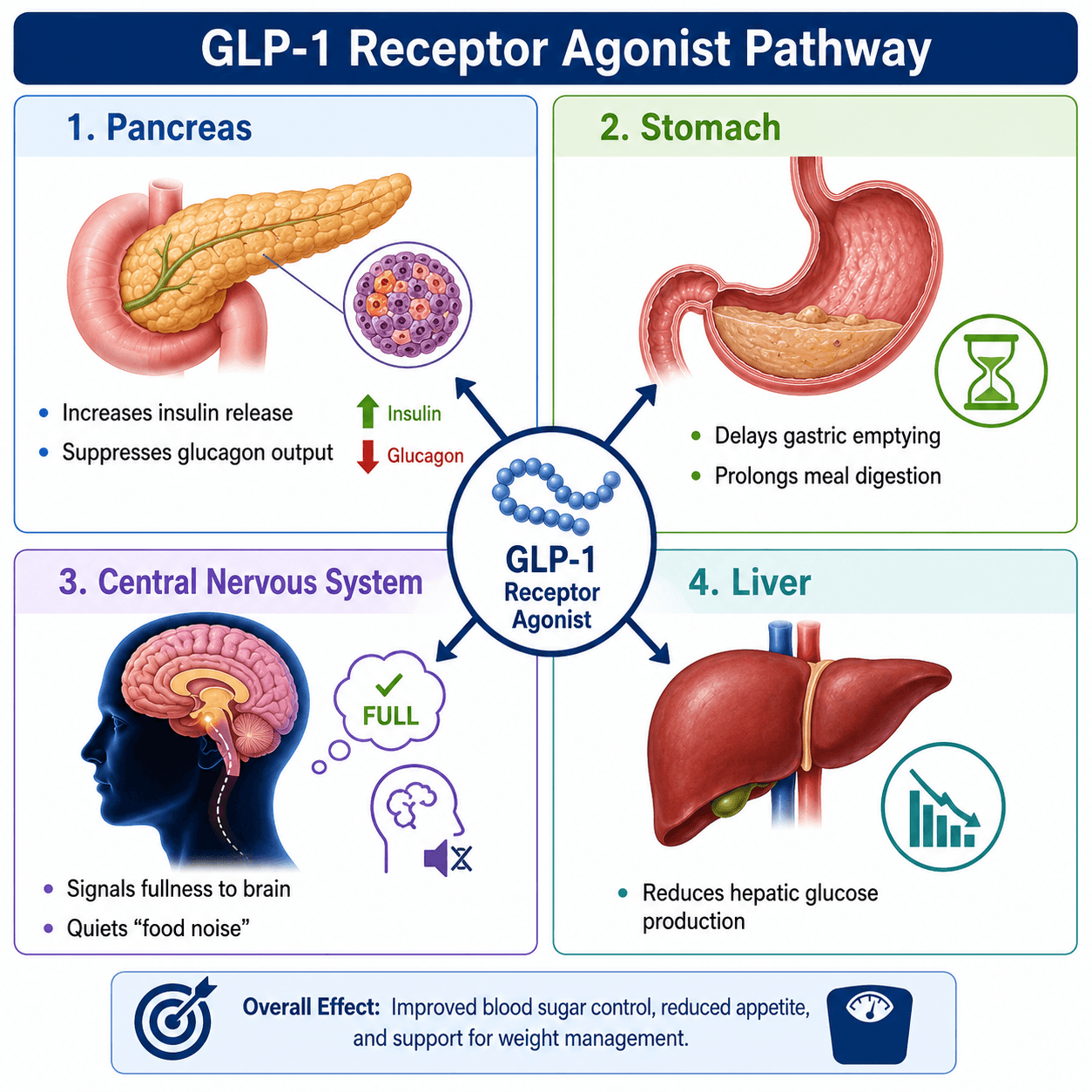
GLP-1 medications regulate blood sugar and digestion through multi-organ metabolic pathways, including pancreas activation, gastric slowing, and brain signaling.
GLP-1 medications control blood sugar and appetite by sending natural signals to the pancreas, stomach, and brain. Normally, your gut releases specific hormones after meals to help digest food and absorb nutrients. GLP-1 drugs strengthen these biological signals, making it easier for your body to maintain stable blood sugar levels and control hunger throughout the day.
1. Insulin Secretion and Glucagon Suppression
GLP-1 medications regulate blood sugar by signaling the pancreas and brain to slow digestion and balance hormone levels. These drugs feature glucose dependent insulin release, meaning they only stimulate insulin when your blood sugar is elevated. For instance, if your blood sugar is already at a healthy level, the medication will not trigger unnecessary insulin production, protecting you from low blood sugar crashes. Additionally, they prevent the liver from releasing excess glucose into your bloodstream.
2. Slower Digestion (Delayed Gastric Emptying)
GLP-1 medications regulate digestion by slowing the speed at which food leaves the stomach. For instance, a meal that usually takes two hours to digest may take four hours while on active medication. This slower digestion prevents rapid sugar absorption, helping patients who practice blood sugar monitoring techniques maintain smooth and stable blood sugar levels after eating. For details, see our Continuous Glucose Monitor (CGM) Guide.
3. Brain Signaling and Fullness (Satiety)
GLP-1 medications curb appetite by interacting directly with the hunger and reward centers of the brain. These drugs lower chemical cravings for hyper-palatable, high-calorie foods, allowing patients to feel full with smaller portions. Consequently, people reduce their daily calorie intake effortlessly while maintaining normal energy levels throughout the day.
What Are the Most Common GLP-1 Brands Available?
Major Indian GLP-1 brands include Glipiq, Obeda, Yurpeak, Semaglu, and Lirafit, which differ in their active ingredients, medical purposes, and dosage methods. Knowing the differences among these medications is essential for choosing the right treatment for Type 2 diabetes or weight management based on your personal health needs.
| Brand Name | Active Ingredient | Drug Class | Primary Indication | Delivery Method | Indian Manufacturer / Partner |
|---|---|---|---|---|---|
| Glipiq | Semaglutide | Single GLP-1 RA | Type 2 Diabetes & Weight Management | Weekly Injection (Pre-filled Pen) | Glenmark |
| Obeda | Semaglutide | Single GLP-1 RA | Type 2 Diabetes & Weight Management | Daily Oral Tablet / Injection | Dr. Reddy's |
| Semalix | Semaglutide | Single GLP-1 RA | Type 2 Diabetes & Weight Management | Daily Oral Tablet / Injection | Torrent Pharmaceuticals |
| Yurpeak | Tirzepatide | Dual GIP/GLP-1 RA | Type 2 Diabetes & Weight Loss | Weekly Injection (KwikPen) | Cipla |
| Lirafit | Liraglutide | Single GLP-1 RA | Type 2 Diabetes & Chronic Obesity | Daily Injection (Pre-filled Pen) | Glenmark |
Semaglutide Medications: Glipiq, Obesema, and Semalix
Semaglutide is a selective GLP-1 medication sold in India under various domestic brand names, including Glipiq and Obesema as once-weekly injectable pens for Type 2 diabetes and weight management, as well as Obeda and Semalix as once-daily oral tablets.
Injectable brands like Glipiq (Glenmark) and Obesema (Alkem) deliver semaglutide through subcutaneous injection for glucose control and weight management. Meanwhile, oral formulations such as Obeda (Dr. Reddy's) and Semalix (Torrent) are semaglutide tablets taken once daily on an empty stomach.
Tirzepatide Medications: Mounjaro and Yurpeak
Tirzepatide is a dual Glucose-dependent Insulinotropic Polypeptide (GIP) and Glucagon-like Peptide-1 (GLP-1) medication.
In India, tirzepatide is marketed under domestic brand names such as Yurpeak (distributed by Cipla) as well as Mounjaro (Eli Lilly India). It is administered as a once-weekly injection using a pre-filled pen or vial, providing dual GIP/GLP-1 receptor activation for both Type 2 diabetes management and chronic weight management.
What Is the Difference Between Semaglutide and Tirzepatide?
The primary difference between semaglutide and tirzepatide is that semaglutide targets a single hormone (GLP-1), whereas tirzepatide targets two natural hormones: Glucose dependent Insulinotropic Polypeptide (GIP) and Glucagon like Peptide-1 (GLP-1).
- Semaglutide: Mimics the natural GLP-1 hormone to control appetite and blood sugar, helping patients lose an average of 15% of their body weight over 68 weeks. (Source: STEP 1 Clinical Trial, New England Journal of Medicine, 2021)
- Tirzepatide: Combines GIP and GLP-1 hormone action to boost fat breakdown and digestion, helping patients lose up to 20.9% of their body weight over 72 weeks. (Source: SURMOUNT-1 Trial, New England Journal of Medicine, 2022)
What Are the Side Effects of GLP-1 Medications?
The primary side effects of GLP-1 medications involve the digestive system, including nausea, vomiting, diarrhea, constipation, and acid reflux. Most reactions occur during the early dose increases while your body adjusts to slowed digestion, and they typically subside after several weeks.
- Gastrointestinal Symptoms: Mild-to-moderate nausea occurs in 20% to 44% of users initially, along with potential diarrhea, constipation, and acid reflux.
- Injection Reactions: Minor redness, itching, or swelling near the injection site.
- Relief Strategies: Managing side effects requires staying hydrated and adopting a High-Protein Diet & Satiety Guide to ease digestion.
- Rare Serious Risks: Serious concerns include pancreatitis, gallbladder disease, kidney strain from dehydration, and thyroid tumor risks (found in rodent studies). Patients with a personal or family history of MTC or MEN 2 thyroid conditions should avoid these medications.
Who Is an Ideal Candidate for GLP-1 Treatment?
An ideal candidate for GLP-1 treatment is an adult with Type 2 diabetes or an individual with a BMI of 30 or higher (or 27+ with a weight-related health condition). Medical guidelines set specific qualification criteria based on body mass index and underlying health conditions:
- Obesity and Weight Management: Generally recommended for adults with a Body Mass Index (BMI) of 30 or higher, or 27 or higher if they also have a weight-related health condition, such as high blood pressure, high cholesterol, sleep apnea, or heart disease.
- Type 2 Diabetes Management: Typically recommended for adults with Type 2 diabetes whose Hemoglobin A1c (HbA1c) blood sugar levels remain above target despite treatment with first-line medications, such as metformin.
- Clinical Evaluation: GLP-1 medications are prescribed to treat obesity and Type 2 diabetes, not for cosmetic weight loss. Before starting treatment, your healthcare provider will conduct a comprehensive evaluation, including blood tests, a review of your medical history, and an assessment of whether GLP-1 therapy is appropriate for you.
Determine Your Eligibility
Body Mass Index (BMI) is one of the key factors healthcare providers use to determine whether you may be eligible for GLP-1 therapy. Calculate your BMI to take the first step toward understanding your eligibility.
How Do You Safely Transition Off or Maintain GLP-1 Therapy?
To safely discontinue or continue GLP-1 therapy, work with your healthcare provider to gradually taper your dose or transition to a long-term maintenance plan. Because obesity and Type 2 diabetes are chronic conditions, abruptly stopping the medication can lead to a rapid return of hunger and elevated blood sugar levels.
- Weight Regain Risks: Research shows that patients who stop GLP-1 therapy without a structured maintenance plan regain approximately two-thirds of the weight they lost within one year. (Source: STEP 1 Extension Study, Diabetes, Obesity and Metabolism, 2022)
- Long-Term Maintenance: Many patients continue taking a low maintenance dose for the long term to maintain stable blood sugar levels and support weight management.
- Safe Tapering Steps: If treatment needs to be discontinued because of any factors such as cost, side effects, or any other medical reasons, healthcare providers typically reduce the dosage gradually. They also recommend a high-protein rich diet, regular strength training to preserve muscle mass, and blood sugar monitoring to maintain the benefits of treatment.
How to Determine Your Eligibility and Discuss GLP-1 Options with Your Doctor
Preparing for a GLP-1 consultation with your doctor involves gathering baseline lab results, verifying your insurance coverage, and scheduling a clinical evaluation. Taking an organized approach helps your healthcare provider determine whether GLP-1 therapy is right for you.
- Collect Baseline Data: Gather your medical history, a list of current medications and recent lab results, such as fasting blood glucose and Hemoglobin A1c (HbA1c).
- Schedule a Consultation: Make an appointment with a primary care physician, endocrinologist, or obesity medicine specialist.
- Get Baseline Screenings: Undergo any recommended blood tests and health screenings before starting GLP-1 therapy.
Key Questions to Ask Your Healthcare Provider
When consulting a healthcare provider about GLP-1 medications, ask specific questions about medication options, side effect management, potential drug interactions, and the lifestyle changes needed to support treatment.
- On Medication Selection: "Am I a better candidate for a single GLP-1 medication or a dual GIP/GLP-1 drug based on my medical history?"
- On Managing Side Effects: "What is our step-by-step dosing schedule to help minimize common stomach side effects?"
- On Safety & Interactions: "How will a GLP-1 drug interact with my current daily prescriptions?"
- On Lifestyle Integration: "What nutritional changes and workout routines should I combine with my treatment plan?"
Conclusion: GLP-1 Medications Are an Effective Treatment, Not a Miracle Cure
GLP-1 medications are advanced metabolic treatments that help regulate blood sugar, slow digestion, and reduce appetite by mimicking the natural glucagon-like peptide-1 hormone. While these prescription medications provide effective support for managing Type 2 diabetes and chronic weight, they are part of a comprehensive treatment plan, not standalone miracle cures.
For long-term health success, GLP-1 therapy must be paired with healthy lifestyle habits, including personalized nutrition (eating a balanced, high-protein diet to support lean muscle and gut health), regular exercise (prioritizing routine physical activity and resistance training), and medical oversight (regular follow-up with your healthcare provider to ensure safe dosing and effective treatment).
Take the first step toward better metabolic health. Book a consultation with Dr. Kalyan Kalwa to discuss your eligibility for GLP-1 therapy and receive a personalized treatment plan.