Why Your Weight Doesn't Tell the Whole Story
While body weight and other health measurements are useful, body fat percentage provides a more complete picture of overall health. It shows how much of the body is made up of fat compared to muscles, bones, and other lean tissues.
Whether the goal is to improve fitness, manage weight, build muscle, or simply track overall health, understanding body fat percentage is an important first step. It helps measure progress more accurately than the number on the scale alone.
Body Fat Percentage: This is the percentage of your body that is made up of fat. The rest includes muscles, bones, water, and organs.
Body Weight: This is your total weight, including fat, muscle, bones, water, and everything else in your body.
Body Mass Index (BMI): BMI estimates whether your weight is healthy based on your height and weight. While it is easy to calculate, it cannot tell the difference between fat and muscle. This means it may not always give an accurate picture of your health.
Understanding 5 Different Body Fat Percentage Categories
These categories are based on official guidelines from top fitness and sports medicine experts:
- Essential Body Fat (2% to 5%): This is the absolute minimum amount of fat your body needs to survive. Your body relies on this baseline to protect internal organs, stay warm, and absorb critical vitamins like A, D, E, and K.
- The Athletic Body Fat Range (6% to 13%): This range is common for elite athletes and competitive lifters. The lower end of this percentage requires intense dedication and is very hard to maintain long-term.
- The Fitness Body Fat Range (14% to 17%): This is the ideal 'sweet spot' for active individuals who want to look lean, feel highly energetic, and perform at their best.
- The Healthy & Acceptable Range (18% to 24%): This body fat range is completely healthy for moderately active or average adults. While you likely won't see sharp abdominal definition, health risks remain very low.
- Overweight and Obese Body Fat Ranges (25% and Above): A body fat percentage from 25% to 29% is medically considered overweight, while 30% or higher indicates obesity.
DEXA Scan: The Gold Standard
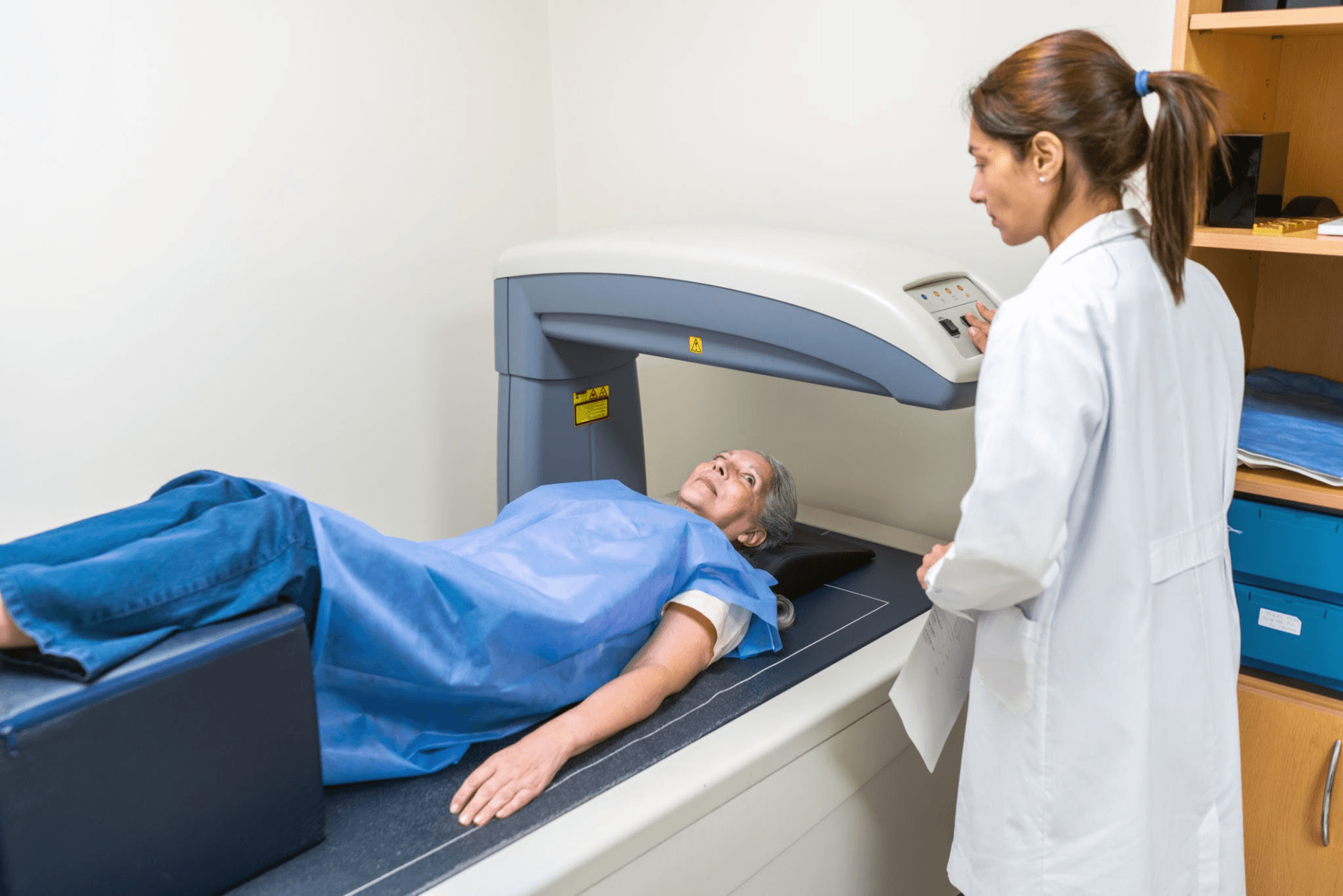
A typical DEXA scan setup mapping bone density, fat distribution, and lean muscle mass.
A DEXA scan is widely considered the most accurate way to track your body fat, muscle, and bone health. During the test, you lie flat on a specialized table while a low-radiation X-ray quickly maps your entire body. While it is incredibly precise, it can be expensive and requires booking an appointment at a medical or imaging center.
Hydrostatic Weighing (Underwater Weighing)
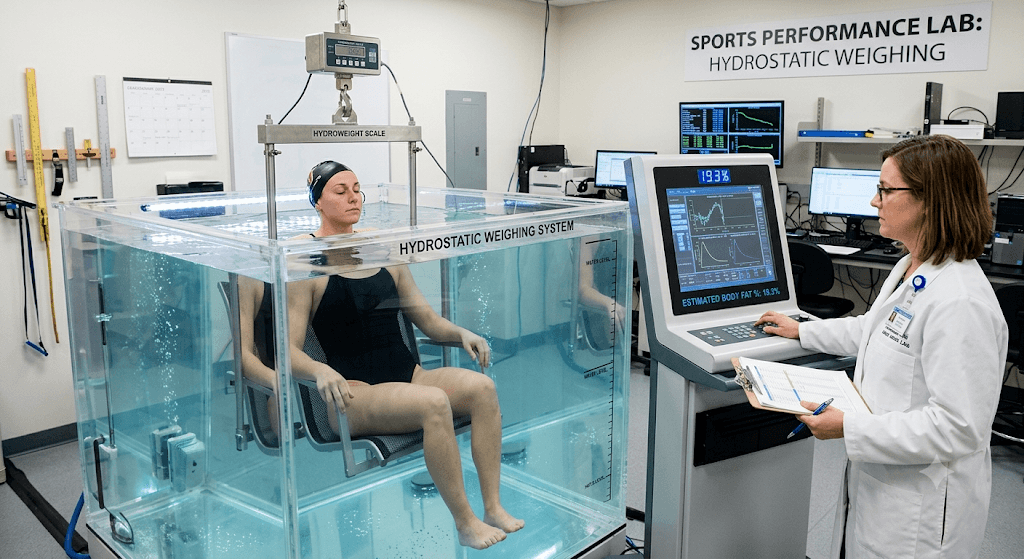
Underwater weighing uses displacement and buoyancy to accurately calculate fat density.
This method calculates your body fat by comparing your weight on land to your weight while fully submerged in a specialized water tank. Because fat tissue floats and dense muscle sinks, this test gives an incredibly reliable measurement. It is mostly found in advanced university research labs and elite sports science centers.
Practical Everyday Options
- Smart Body Fat Scales (BIA Scales): These send a completely painless, low-level electrical current up through your feet or hands. Muscle tissue holds water and conducts the current quickly, while fat creates resistance. By measuring this impedance, the scale estimates your body fat percentage.
- Top Tip for Accuracy: To get the most consistent results, always step on the scale at the exact same time of day (preferably first thing in the morning on an empty stomach).